Traditions
Moroccan Mint Tea: History and Preparation
The story of atay, Morocco’s national drink, its etiquette and rituals, and how to make Moroccan mint tea at home, step by step.
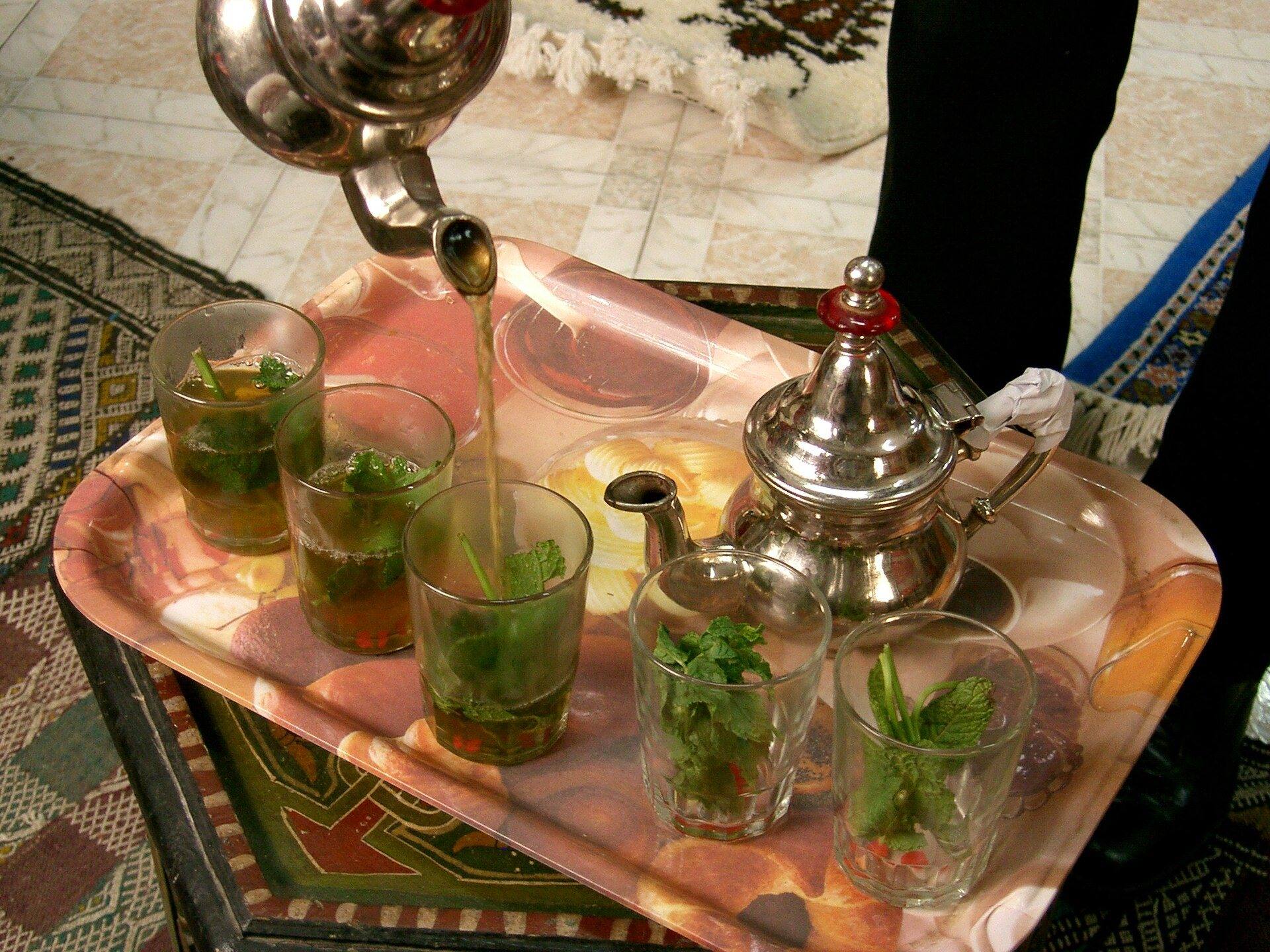
Arrive at a Moroccan home, a carpet shop or a desert camp and, within minutes, someone will be pouring you a glass of sweet mint tea. Known as atay, it is the country’s everyday drink and its most familiar gesture of hospitality.
A short history
Tea is not native to Morocco. Green tea is generally understood to have arrived through trade with Europe, appearing at the royal court in the 18th century and becoming widely popular during the 19th century, as trade expanded and sugar became more affordable. It is often said that British merchants, looking for new markets, played a role in making green tea widely available.
Moroccans combined imported Chinese gunpowder green tea with something very local: fresh spearmint. Add plenty of sugar, and a national ritual was born. Today, mint tea is drunk throughout the day, offered to guests and served at every celebration.
The ingredients
- Gunpowder green tea: tightly rolled pellets of green tea that unfurl in hot water.
- Fresh spearmint (naanaa): bunches of it are sold in every market.
- Sugar: traditionally cut from large cones, today usually in cubes or granules.
- Boiling water.
In some regions and seasons, other herbs are added: sheba (wormwood) in winter, lemon verbena, sage, or marjoram. In the south, tea can be prepared stronger and in several rounds.
The tools
A traditional set includes a bulbous metal teapot, often silver-coloured, small decorated glasses and a round tray. Over a fire or small stove, the teapot can be heated directly.
How to make Moroccan mint tea
For a teapot of about 750 ml (5 to 6 small glasses).
- Warm the pot. Rinse the teapot with boiling water.
- Rinse the tea. Put about 1 tablespoon of gunpowder green tea in the pot. Pour over a small glass of boiling water, swirl, then pour this first glass off and keep it aside. It is considered the “spirit” of the tea.
- Wash the tea. Pour another small amount of boiling water over the leaves, swirl and discard. This removes bitterness and dust.
- Add the reserved glass, a large handful of fresh mint (stems included, pushed down into the pot) and sugar to taste. Traditionally that is a lot of sugar; start with 2 to 3 tablespoons and adjust.
- Fill and steep. Fill the pot with boiling water and leave it to steep for 3 to 5 minutes, or heat gently for a few minutes without letting it boil hard.
- Mix by pouring. Pour a glass and tip it back into the pot. Repeat two or three times. This mixes the sugar and tea without stirring.
- Taste. Pour a little into a glass and taste. Adjust the sugar if needed.
- Pour from height. Lift the teapot high as you pour, to aerate the tea and create a light foam on top. Start low, raise the pot as the glass fills, then lower it again to finish.
Tea etiquette
- Accept at least one glass. Refusing tea can seem unfriendly.
- Expect more than one. It is common to be served two or three glasses, and a saying holds that each one tastes different: the first gentle, the second strong, the third bitter.
- The host pours. Pouring tea for guests is a role of honour, often taken by the head of the household.
- Hold the glass by the rim. The glasses get very hot.
- Ask for less sugar if you prefer. It is perfectly acceptable to say “shwiya sukkar” (a little sugar).
What to serve with mint tea
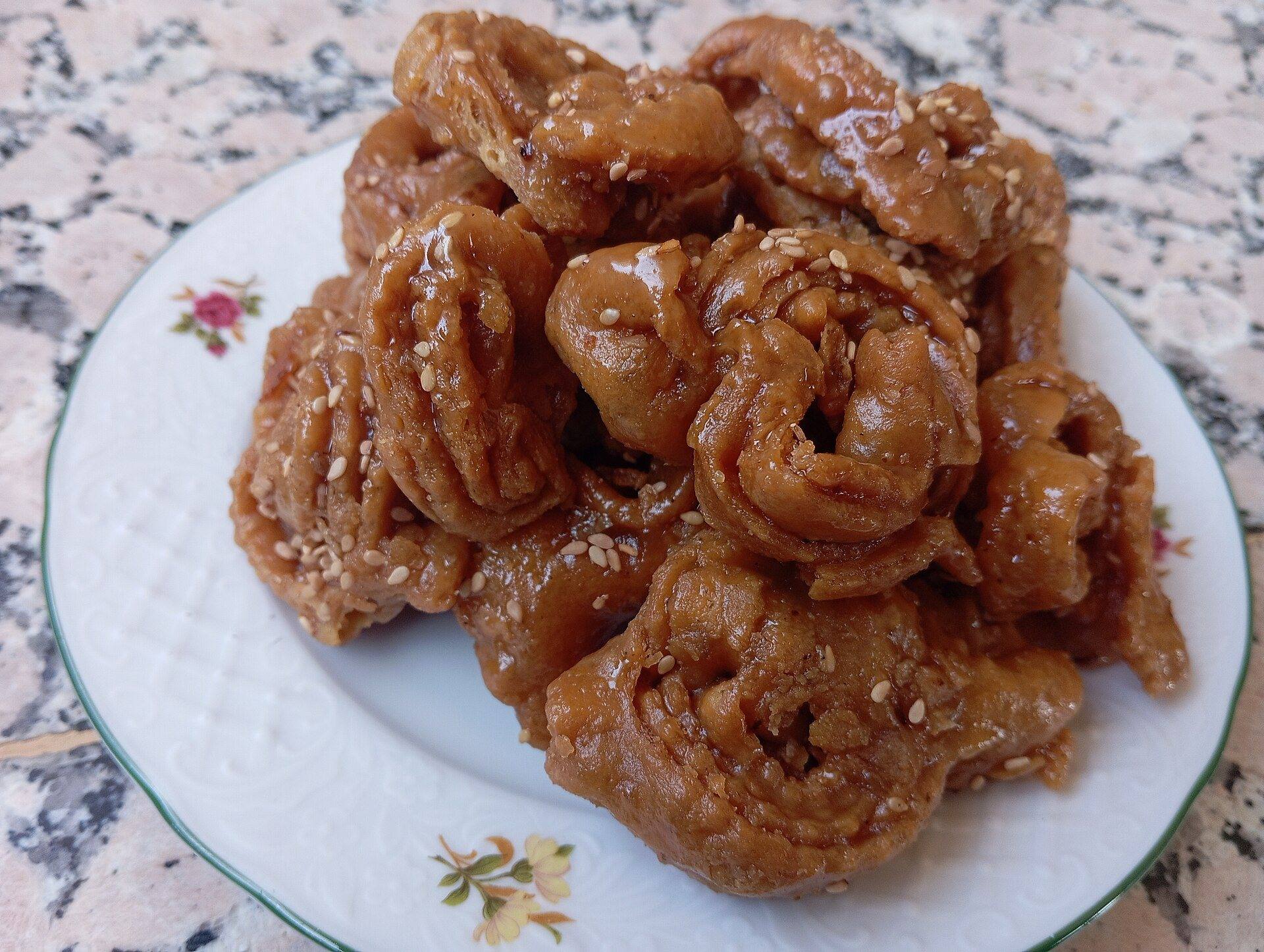
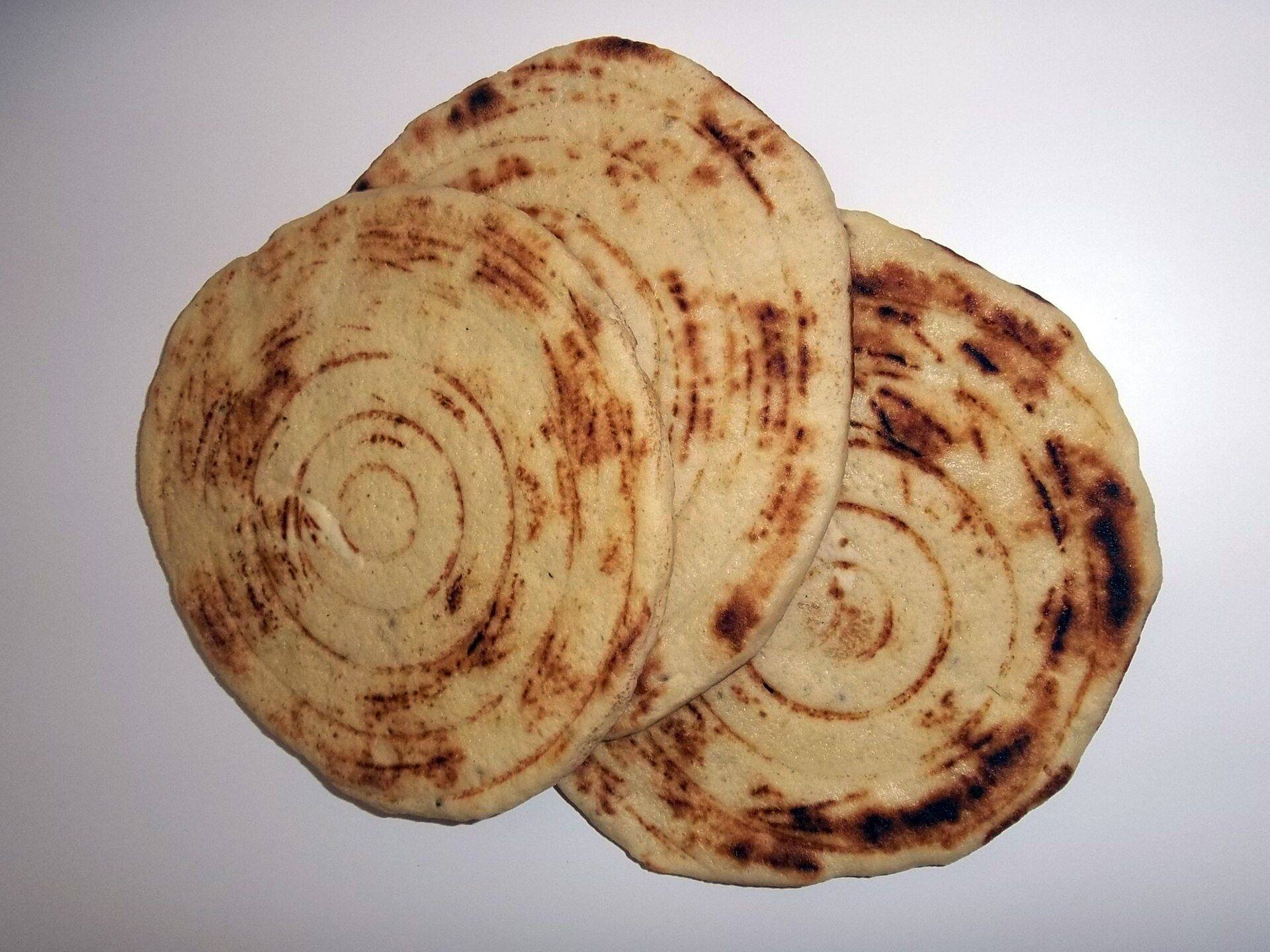
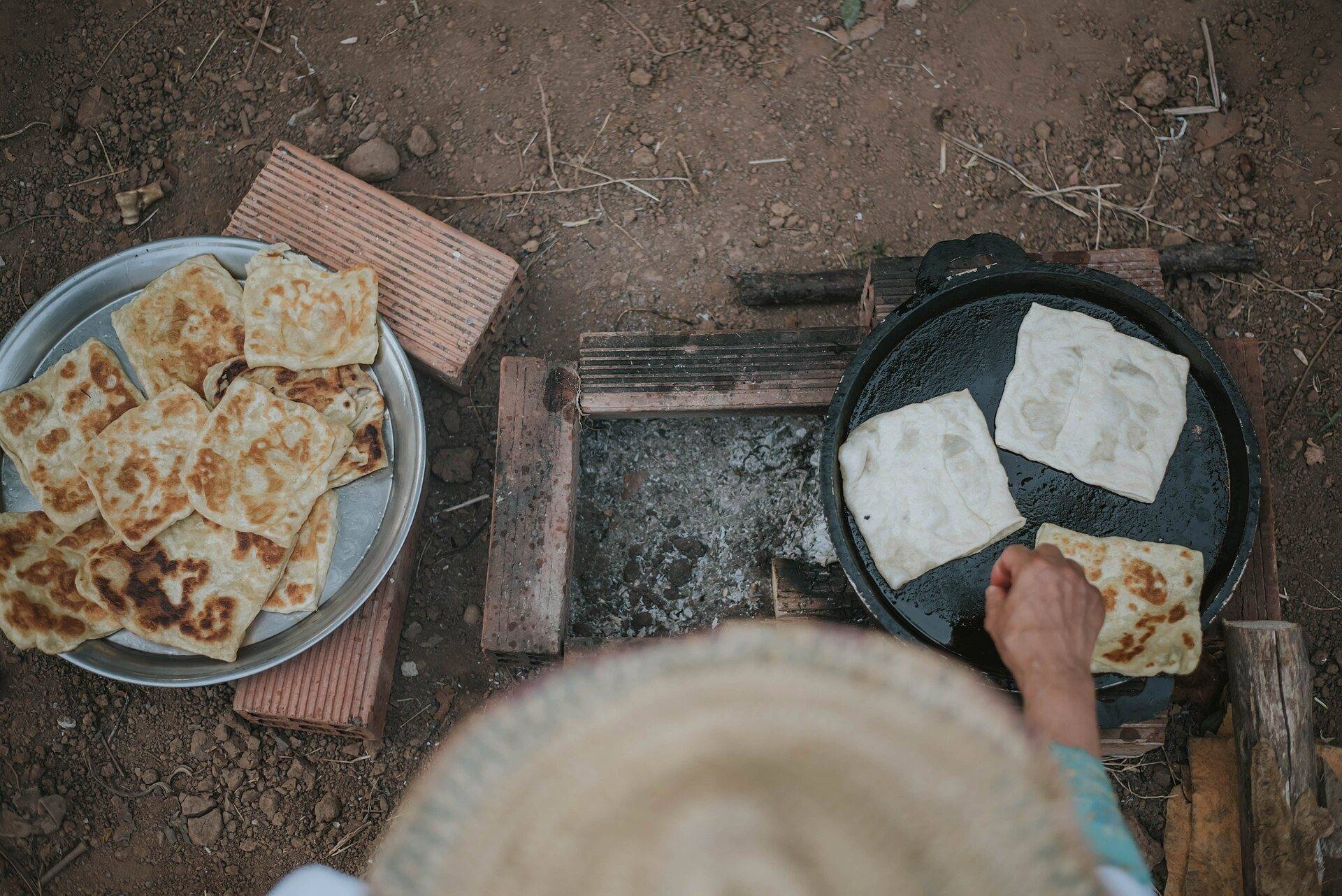
Mint tea is usually accompanied by something sweet or savoury: biscuits such as ghriba and fekkas, pastries such as chebakia, msemen with honey, almonds, dates or bread with olive oil.
Where to enjoy mint tea in Morocco
Mint tea tastes different depending on where you drink it: on a rooftop in Marrakech, in a café overlooking the Strait of Gibraltar in Tangier, or around a fire at a camp near the dunes of Merzouga.
Learn the ritual
A Moroccan mint tea experience is a short, relaxed way to learn the ritual with a local host, and combines beautifully with a pastry class.