Dishes
Discover the Secrets of Moroccan Couscous
Why Moroccan couscous is steamed, not boiled, how it is rolled and served, the Friday tradition behind it, and the difference between couscous and tagine.
Outside North Africa, couscous is often thought of as a quick side dish: pour on boiling water, wait five minutes, fluff with a fork. In Morocco it is something else entirely, a patient, hands-on dish at the centre of family life.
What is couscous?
Couscous is made from semolina, the coarse flour of durum wheat. Traditionally, semolina is sprinkled with salted water and rolled by hand in a wide, shallow dish until it forms tiny granules. These are sieved to an even size and dried. In rural areas, couscous is also made from barley or other grains.
Most Moroccan households now buy dried couscous, but the way it is cooked has not changed: it is steamed, several times, over a simmering broth.
The secret is steaming
The key tool is the couscoussier, a two-tier pot. The broth simmers in the bottom; the couscous sits in a perforated steamer on top, absorbing the aroma of the vegetables and spices below.
The process goes roughly like this:
- Moisten. The dry couscous is sprinkled with salted water and rubbed between the palms so every grain is coated. A little oil helps keep the grains separate.
- First steam. The couscous goes into the steamer. Timing starts when steam rises through the grain. After 15 to 20 minutes it is tipped back into the dish.
- Break up and moisten again. The clumps are broken up by hand (carefully: it is hot), more water is sprinkled over, and the grains are rubbed again.
- Second and third steams. The process is repeated. With each steaming, the grains swell and become lighter. Butter is often worked in at the end.
The result is couscous that is light, fluffy and separate, with no sticky clumps. It takes time, which is why couscous is a weekend and holiday dish.
The broth
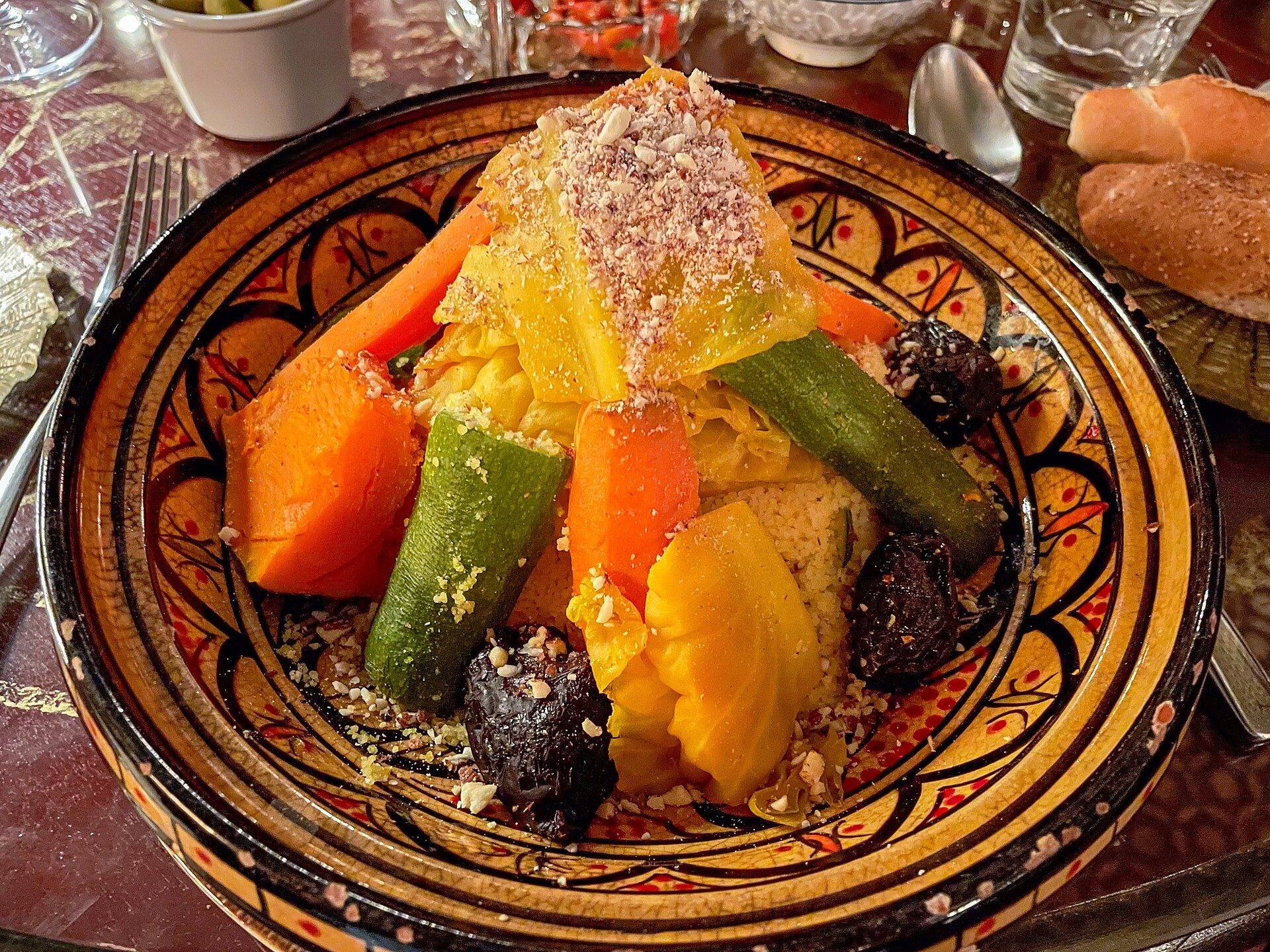
The couscous is only half the dish. The broth, called marqa, is cooked with meat (often lamb, beef or chicken) or chickpeas, onions, tomatoes and spices such as ginger, turmeric, pepper and saffron. Vegetables are added in order of how long they take to cook: turnips and carrots first, then courgettes, squash and cabbage.
The most famous version is seven-vegetable couscous, which uses whatever is in season. Others include:
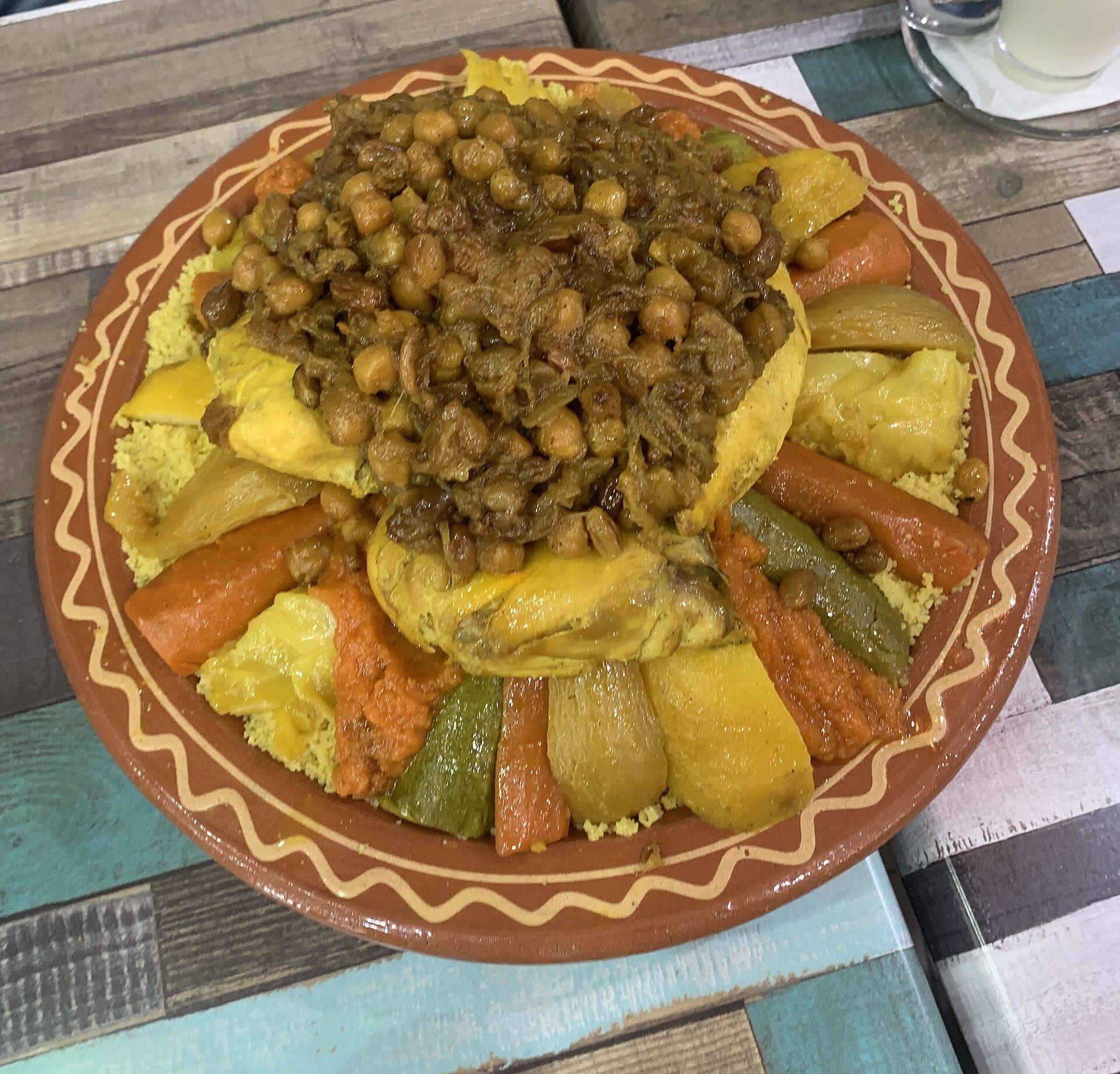
- Couscous tfaya: topped with onions caramelised with raisins, cinnamon and honey.
- Seffa: a sweet version with butter, cinnamon, sugar and almonds, sometimes served with chicken.
- Barley couscous (belboula): a rustic, nutty Amazigh version.
How couscous is served and eaten
Couscous is served in a large shallow dish, the grain heaped into a mound with a hollow in the centre. Meat goes into the hollow, vegetables are arranged around and over it, and broth is spooned on top. Extra broth is served on the side.
Everyone eats from the shared dish, from the section in front of them. Many Moroccans use their right hand, rolling couscous into small balls; spoons are also common.
Why couscous is eaten on Friday
Friday is the main day of congregational prayer in Morocco, and many families gather after the midday prayer for a large couscous lunch. Couscous is also traditionally shared with neighbours and those in need, and prepared for celebrations and family gatherings. It is a dish about togetherness.
What is the difference between couscous and tagine?
This is one of the most common questions travellers ask:
| Couscous | Tagine | |
|---|---|---|
| What it is | Steamed semolina grain with a broth | A slow-cooked stew |
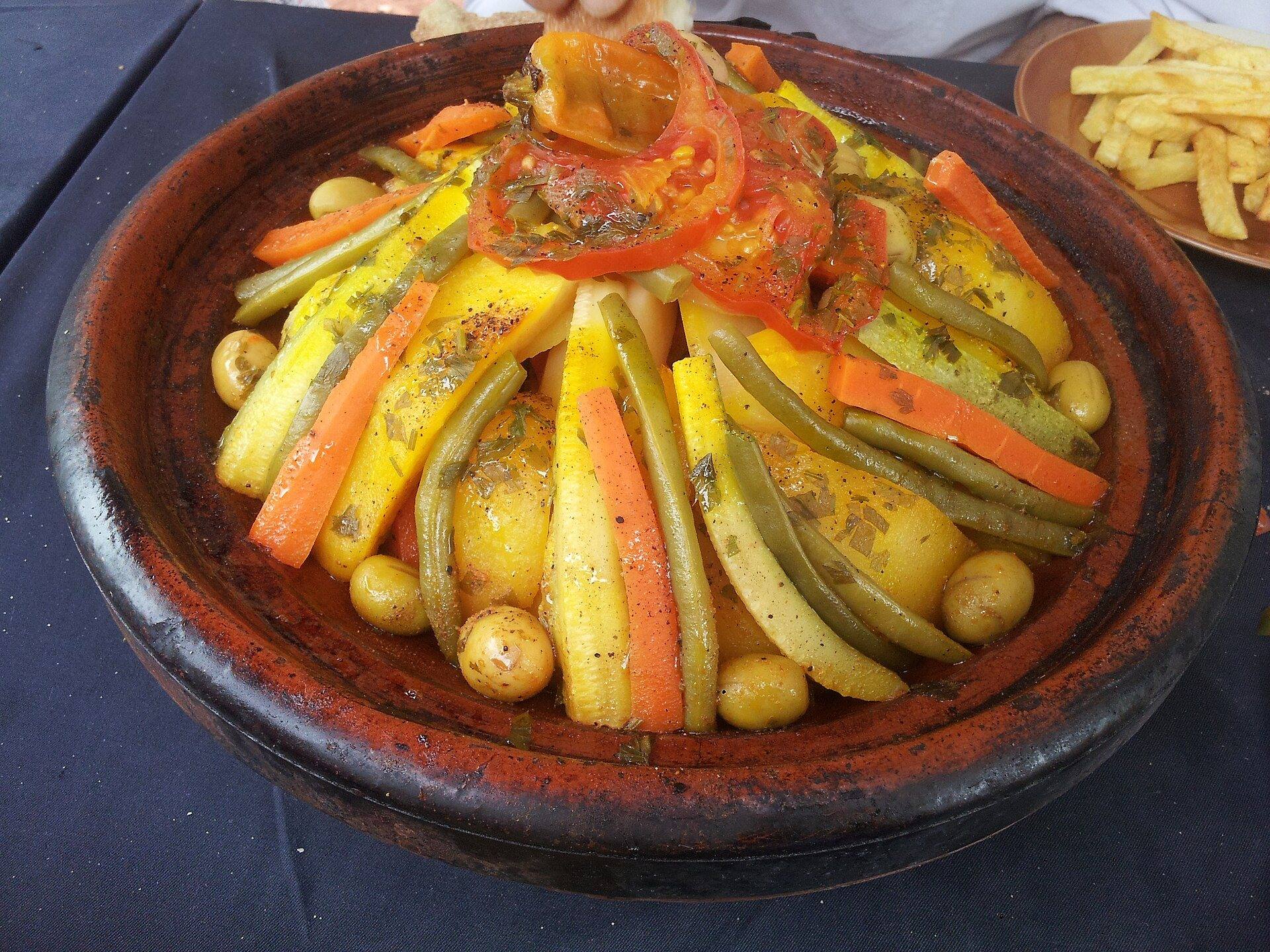
| Cooking vessel | Couscoussier (two-tier steamer) | Conical clay tagine pot |
| How it is eaten | From a shared dish, with a spoon or by hand | Scooped up with bread |
| When | Traditionally Friday lunch and celebrations | Any day |
They are often served at the same meal in restaurants for visitors, but in Moroccan homes they are very different dishes.
Tips for cooking couscous at home
- Never just pour boiling water on it if you want Moroccan-style couscous. Steam it instead, even if only twice.
- If you do not have a couscoussier, use a colander that fits snugly over a large pot, sealing the gap with a damp cloth.
- Do not put the couscous in until the broth is boiling, so the steam rises straight through.
- Work the grains with oiled hands to stop clumps forming.
Learn couscous in Morocco
Couscous is one of the best dishes to learn hands-on, because so much depends on feel: how damp the grain should be, when it is ready to steam again, how to break up the clumps. Join a couscous workshop with a local cook, ideally on a Friday, when couscous is being made in homes across the country.