Ingredients
A Guide to Moroccan Spices
The essential spices of Moroccan cooking: cumin, ginger, paprika, turmeric, cinnamon, saffron and ras el hanout. How they are used, what they taste like and how to buy them.
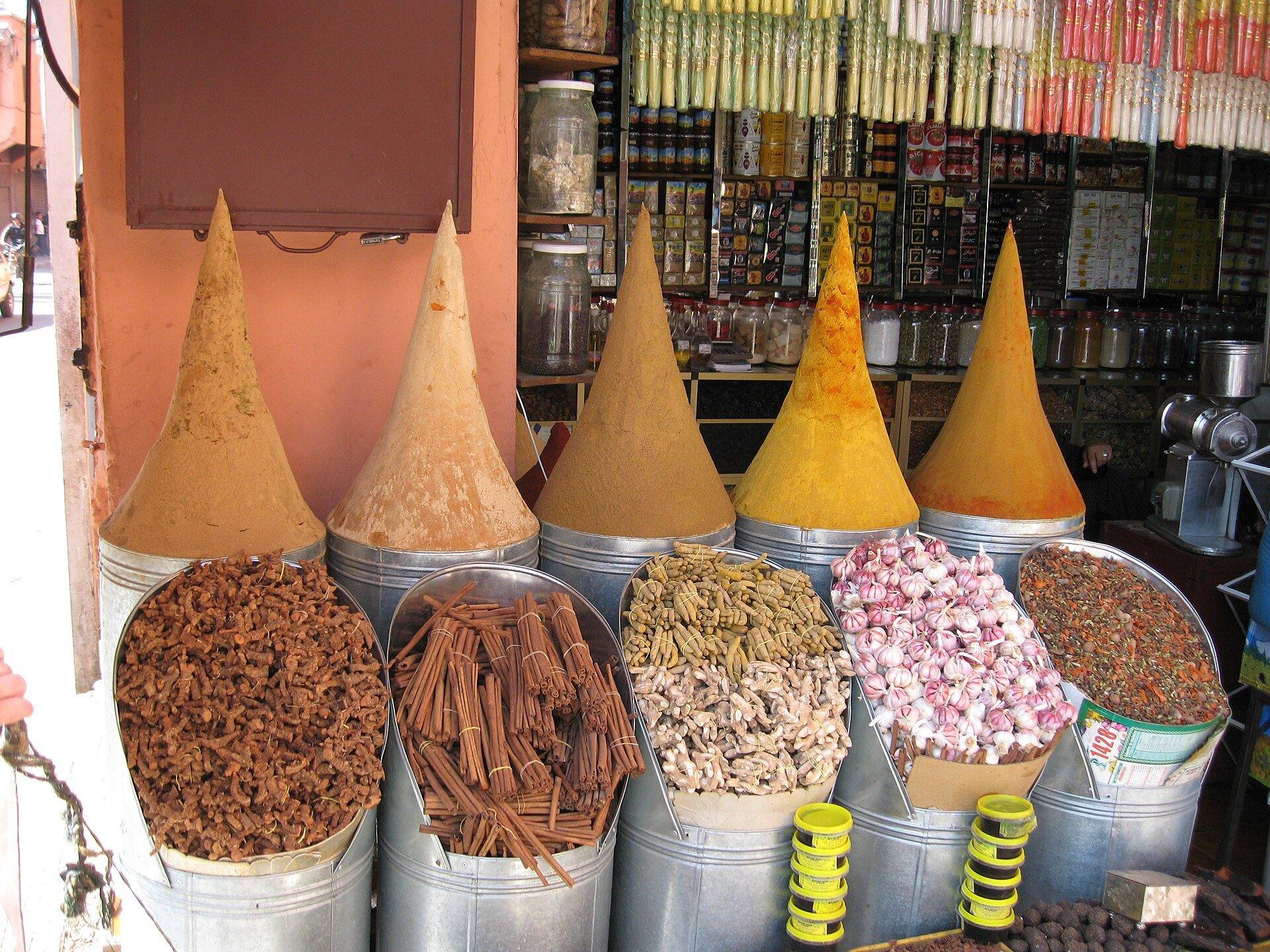
Walk into any Moroccan spice shop and you will be met by neat cones of red, yellow and brown powders, sacks of dried rosebuds and shelves of glass jars. It can be overwhelming. Yet Moroccan home cooking relies on a fairly small set of spices, combined with skill and restraint rather than heat.
Moroccan food is aromatic, not fiery. Chilli is used, but most dishes are warm and fragrant rather than hot.
The essential spices
Cumin (kamoun)
Earthy and slightly bitter, cumin is everywhere: in kefta, in cooked salads such as zaalouk, on grilled meat and on hard-boiled eggs. In Marrakech, a small dish of cumin and salt is often served with mechoui (slow-roasted lamb).
Ground ginger (skinjbir)
Ginger is one of the backbones of Moroccan cooking, especially in tagines with chicken, lamb or beef. It is used dried and ground, giving gentle warmth rather than the sharpness of fresh ginger.
Sweet paprika (tahmira or felfla hlowa)
Sweet paprika adds colour and a mild, rounded flavour to kefta, fish dishes, chermoula and many salads.
Turmeric (kharqoum)
Turmeric gives a golden colour to tagines, couscous broths and harira. It is often used alongside, or instead of, saffron in everyday cooking.
Cinnamon (karfa)
Cinnamon appears in both sweet and savoury dishes: lamb with prunes, couscous tfaya, pastilla, seffa and orange salad. Its use in savoury food is a hallmark of Moroccan cuisine.
Saffron (zaafrane)
Saffron is the most precious spice in the Moroccan kitchen. A few threads, soaked in warm water, flavour and colour chicken tagines, couscous and harira. Morocco produces saffron, particularly around Taliouine in the south, between Taroudant and Ouarzazate.
Buying tip: real saffron is expensive and sold in small quantities. Be cautious of very cheap “saffron”; it is often dyed safflower or another substitute. Buy from a trusted shop.
Black and white pepper
Ground black pepper is used in most savoury dishes; white pepper appears in some refined dishes, especially in Fes.
Ras el hanout: the shop’s best
Ras el hanout means “head of the shop”, and it is each spice merchant’s signature blend. It can contain more than twenty ingredients, such as cardamom, nutmeg, mace, cinnamon, ginger, cloves, black pepper, turmeric, allspice and dried rosebuds. Every blend is different.
Ras el hanout is used in dishes such as rfissa, mrouzia and some tagines and couscous. Use it sparingly: it is powerful.
Herbs and aromatics
Spices are only part of the story. Fresh herbs play a huge role:
- Fresh coriander and flat-leaf parsley go into almost every tagine and marinade.
- Spearmint is essential for mint tea.
- Preserved lemons add a salty, fragrant sourness to chicken and fish tagines.
- Orange blossom water perfumes pastries, salads and desserts.
- Smen, a preserved, aged butter, gives depth to couscous and tanjia.
Chermoula: a marinade to know
Chermoula combines fresh coriander and parsley, garlic, lemon juice, olive oil, cumin, sweet paprika and sometimes chilli. It is especially used for fish, and is a speciality of coastal cities such as Essaouira.
How spices are used in a tagine
In a typical chicken tagine, the meat is coated in ginger, turmeric, pepper, saffron, garlic, olive oil and herbs, then cooked slowly on a bed of onions. In a kefta tagine, cumin and paprika dominate. In a lamb tagine with prunes, cinnamon and ginger lead. Read our guide on how to make a traditional tagine.
Buying spices in Morocco
- Buy whole when you can. Whole cumin seeds, cinnamon sticks and peppercorns keep longer than ground spices.
- Smell before you buy. Fresh spices should be strongly aromatic.
- Buy small quantities that you will use within a few months.
- Ask how to use them. Spice sellers are usually happy to explain.
- Pack carefully. Ask for vacuum-sealed or well-wrapped packets, and check the import rules of your home country.
The souks of Marrakech and Fes have some of the most beautiful spice shops in Morocco. A market visit and cooking class is the best way to explore them with someone who knows what to look for, then put them straight to use in the kitchen.