Destinations
Traditional Moroccan Food in Fes
Why Fes is called Morocco’s culinary capital: pastilla, khlii, mrouzia, refined tagines and pastries, and how to explore the food of the medina.
Fes is often described as the culinary capital of Morocco. Founded in the late 8th century, it grew into one of the great cities of the Islamic world, a centre of scholarship, craft and trade. Families from Andalusia, Kairouan and across the region settled here, bringing their kitchens with them. Over centuries, they created a cuisine known for its refinement, balance and patience.
What makes Fassi cooking distinctive?
- Sweet and savoury together. Dishes often combine meat with fruit, honey, cinnamon or sugar.
- Subtle spicing. Spices are used with restraint, layered rather than dominant.
- Elaborate preparations. Many dishes require hours of work, reflecting a tradition of large households and celebrations.
- Preserving. Fes has a strong tradition of preserved foods, such as khlii and preserved lemons.
- Pastry. The city’s sweets are renowned throughout Morocco.
Dishes to look for in Fes
Pastilla
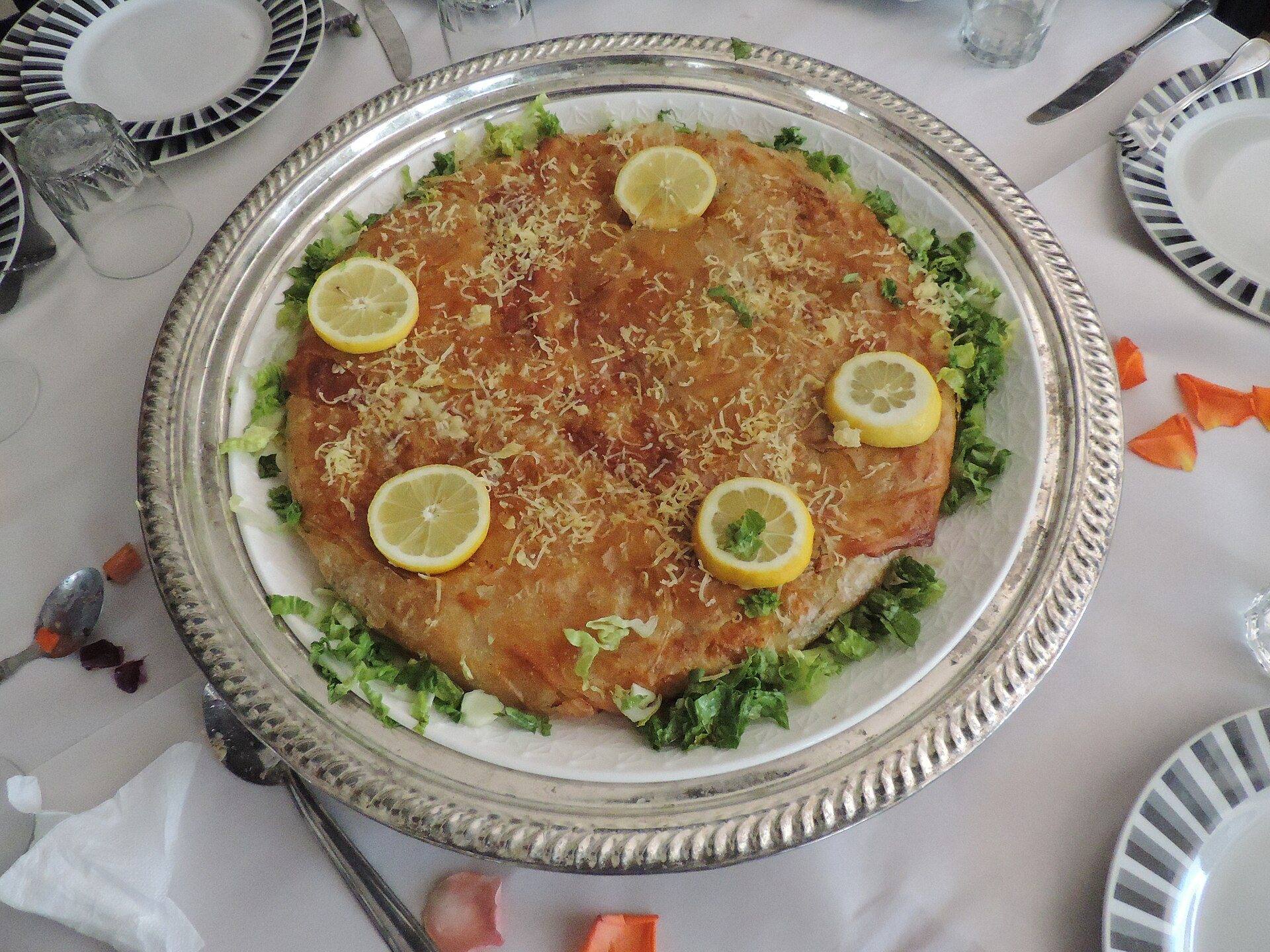
The most famous dish of Fes. Layers of warqa, a paper-thin pastry, enclose a filling of pigeon or chicken cooked with onions, saffron, ginger and cinnamon, set with eggs and layered with fried, sweetened almonds. It is baked until crisp, then dusted with powdered sugar and cinnamon. Pastilla is a dish for weddings and special occasions, and a perfect example of the Fassi love of contrasts.
Khlii
Khlii is beef or lamb cut into strips, marinated in spices, dried in the sun and then cooked and preserved in its own fat. It was once a way of keeping meat through the year. Today it is often eaten at breakfast, fried with eggs.
Mrouzia
Mrouzia is a tagine of lamb with raisins, almonds, honey and ras el hanout. It is traditionally prepared in the days after Eid al-Adha, and its rich, sweet sauce is unforgettable.
Refined tagines
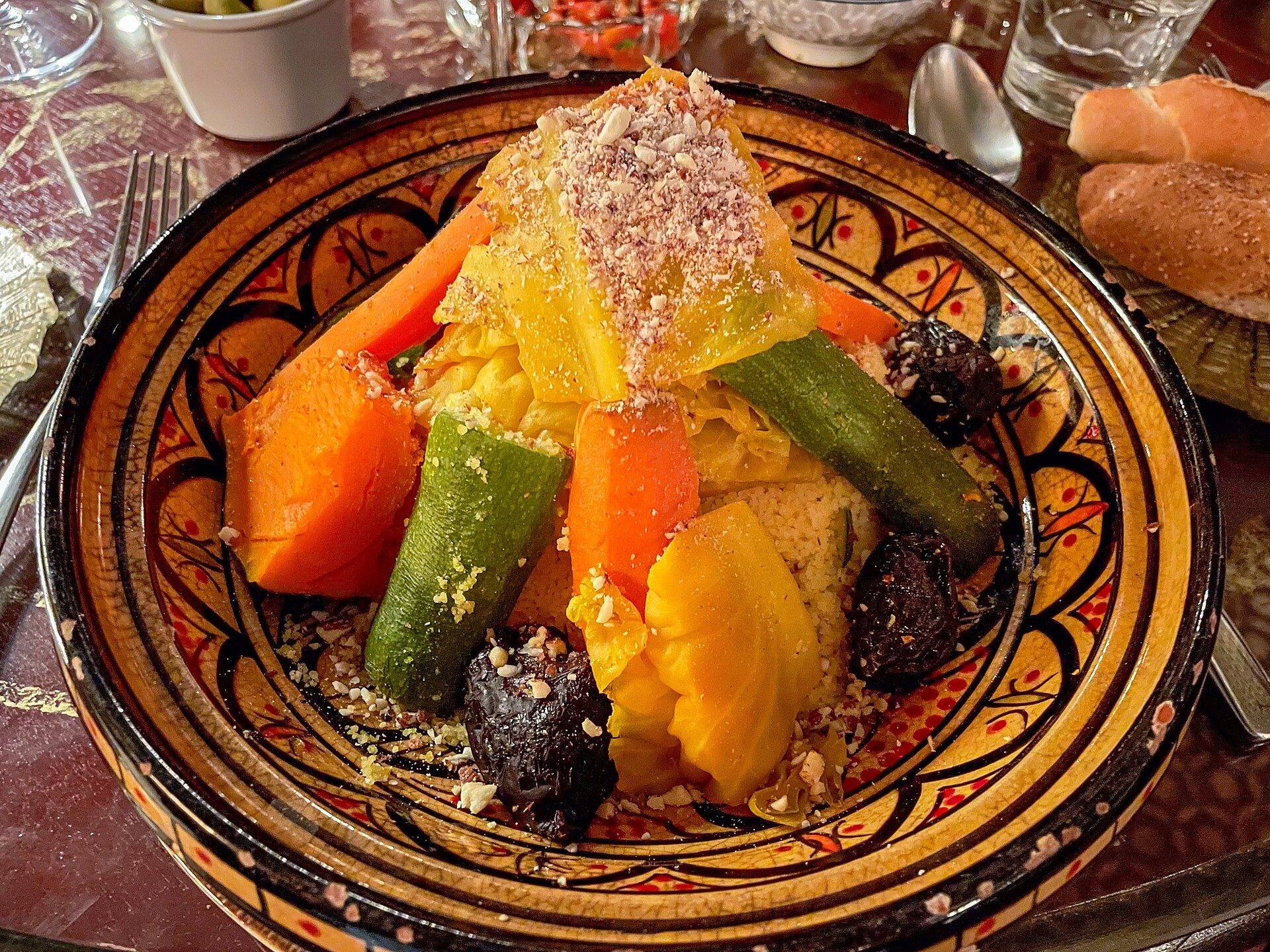
Fes is known for elegant tagines such as chicken with preserved lemon and olives, lamb with quince, or beef with prunes. They are often cooked with more care for colour and presentation than everyday versions.
Seffa
A sweet dish of steamed vermicelli or couscous with butter, cinnamon, sugar and almonds, sometimes hiding pieces of chicken in the centre.
Pastries
Trays of almond pastries, ghriba, gazelle horns and honey-soaked sweets are part of every celebration. Read about the Moroccan pastries you need to try.
Exploring the food of the medina
Fes el-Bali, the old medina, is a UNESCO World Heritage Site and one of the largest car-free urban areas in the world. Goods are still carried by hand and by mule through its narrow lanes, and food is part of daily life everywhere you look.
As you walk, look out for:
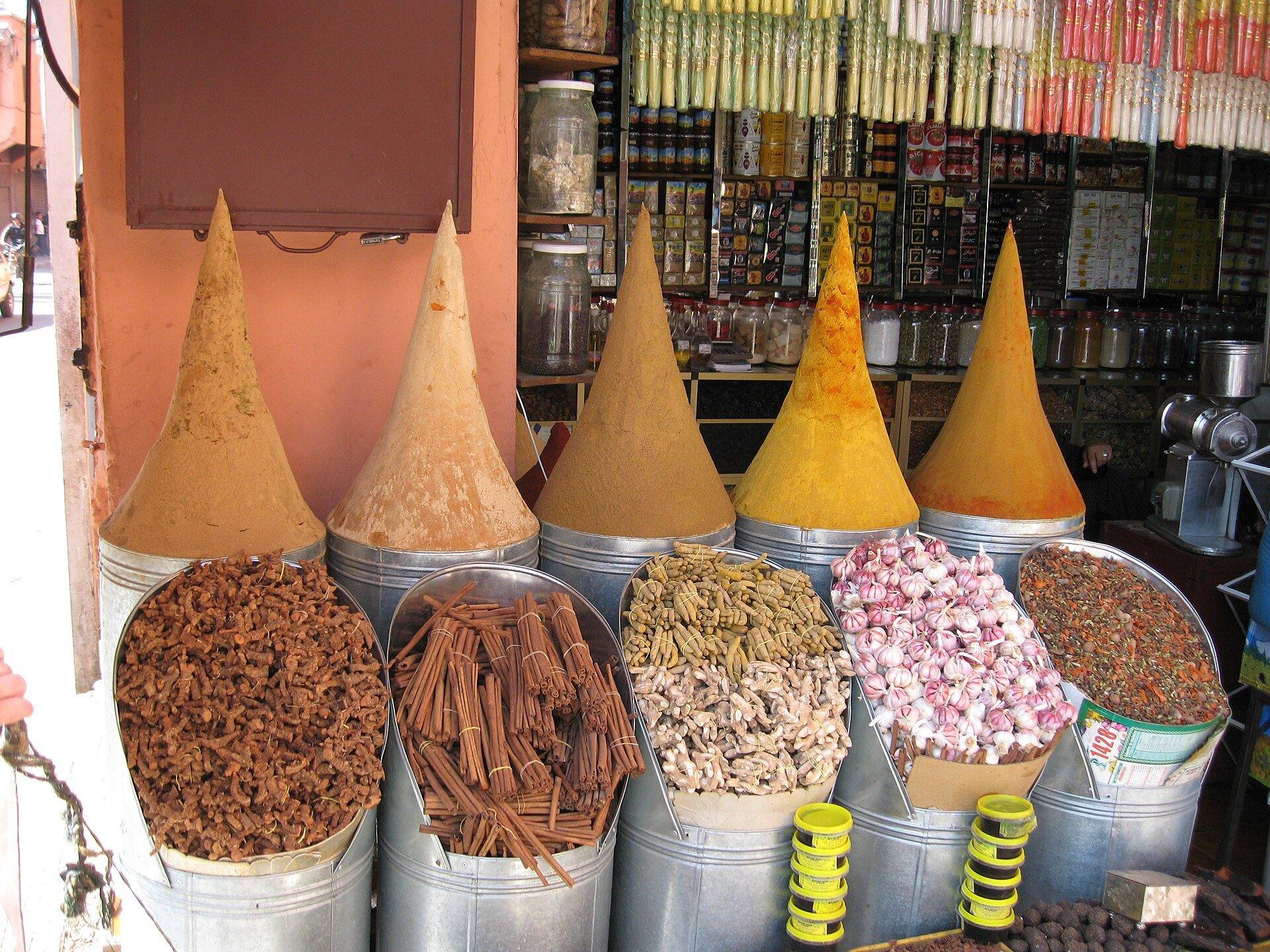
- Olive and preserved lemon stalls, piled high with colour.
- Honey and nougat sellers.
- Dried fruit and nut stalls, with dates, figs and apricots.
- Bakeries and neighbourhood ovens, where families send their bread to be baked.
- Small food stalls selling bissara, harira, sfenj (Moroccan doughnuts) and snacks.
The medina is a maze, and getting lost is part of the experience. But for food, exploring with a local host makes a big difference: you will understand what you are seeing and taste things you might otherwise walk past.
Cooking in Fes
Many cooking experiences in Fes take place in traditional houses inside the medina, built around a central courtyard. Hosts often cook family recipes passed down through generations. Some classes start with a market walk; others focus on a specific dish, such as pastilla or pastries.
Discover the cooking experiences we can arrange in Fes, or tell us what you would like to learn.